Quick navigation
- Stories
- Events
-
Magazine
- History
- Person
- My experience
- Inspiration
- Controversies & Ethics
- Cultural perspectives
- Legal & Business
- Behind the scenes
-
Guide
- Travel Guide
- Questions & Answers
- Shop
- Forums
- Forums
-
Blogs
- All Blogs
- Create Blog
- Users
- Login


Table of content
1. The eye of an artist, the mind of a scientist, and the heart of a journalist2. Ed Koch, 1989
3. The controversial Bush portrait, 1990
4. Rudolph Giuliani, 2001
5. Luis Sarria, 1987
6. Mick Jagger and Tina Turner, 1985
7. Michael Phelps, 2005
8. Jodie Foster, 1991
9. Senator John Glenn, 1998
10. George W. Bush, 1995
11. Bruce Springsteen, 2002
12. Denzel Washington
13. Mike Ditka and Ricky Williams, 2005
14. David Lynch, 1990
15. Hillary Clinton, 1992
16. The role of education and legacy
- November 20, 2025 at 9:58 PM
-
5.2K
-
1 comment
The institutional portrait of Ed Koch: the birth of a new tradition
In the spring of 1989, The New York Times Magazine commissioned Gregory Heisler to create a portrait of New York City Mayor Ed Koch for an article by Sam Roberts, published on June 11, 1989. Over the course of two days, Heisler accompanied Koch as an “invisible observer,” seeking to capture moments when the mayor was simply himself, away from the camera and the public.
Heisler managed to portray Koch from a new, human perspective — thoughtful, focused, and introspective — in sharp contrast to his well-known public persona.
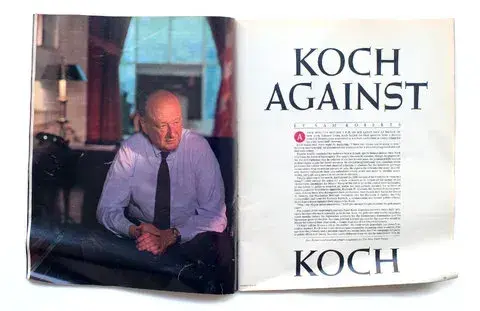
Had the portrait been made in a location such as City Hall, the background would inevitably have commented on status and on the physical infrastructure of New York in the 1980s. However, the requirement for perfectly controlled lighting suitable for high-quality lithographic printing, intended for permanent institutional display, necessitated a studio environment, where Heisler could exercise complete control over the light. In such a studio setting, technical execution — particularly lighting — becomes the sole source of emotional and contextual interpretation, replacing environmental detail with clean, expressive illumination.
Heisler chose a large-format 8×10-inch camera — a tool that demands a slow, deliberate pace and heightened attention. Each sheet of film is loaded by hand, which automatically slows the process and alters the dynamic between photographer and subject. People respond differently to such a camera than to a conventional one — they sense the weight of the moment and the seriousness of intent. Koch sensed this as well.
Lighting
Heisler’s philosophy emphasizes lighting as a fundamental element of his craft. The portrait employed the following lighting components, each aimed at constructing a specific narrative:
Key light: Defined facial contours and texture to ensure accuracy in lithographic reproduction. It was a large, focused, and close source that provided a gentle falloff, revealing character and lived experience in the mayor’s face without excessive harshness.
Fill light: Used to open up critical shadows (under the eyes and along the jawline) in order to reveal detail. This softened signs of age and fatigue, lending a sense of dignity.
Separation light (rim light): Essential for creating three-dimensionality and visual “pop,” it separated the mayor from the background, establishing him as the central figure and enhancing his sense of authority.
The assignment from The New York Times Magazine required Heisler to act as an “invisible observer” for two days, accompanying Koch and attempting to catch moments when the mayor was himself, away from the public and the camera. Heisler noted that when stepping out of a car or helicopter, Koch instantly shifted into his trademark energetic and confident public mode:
How’m I doing?
Yet the photographer also witnessed another, more vulnerable side. Koch was a master of brief rest — a “power napper” — capable of instantly dropping into a short but restorative sleep in a car, or even falling asleep in a noisy helicopter, which Heisler described as a “lullaby” for him. The choice of the 8×10-inch large-format camera further shaped the interaction, as people, including Koch, responded differently to such an instrument, feeling the gravity of the moment and the seriousness of the photographer’s intent.
The resulting portrait was published in the magazine, and the mayor was so impressed that at the end of his term he requested that this photograph be displayed in New York City Hall in place of the traditional formal oil portrait.
The large print created by Heisler thus became the first official portrait of a New York City mayor that was not painted in oil, but photographed.
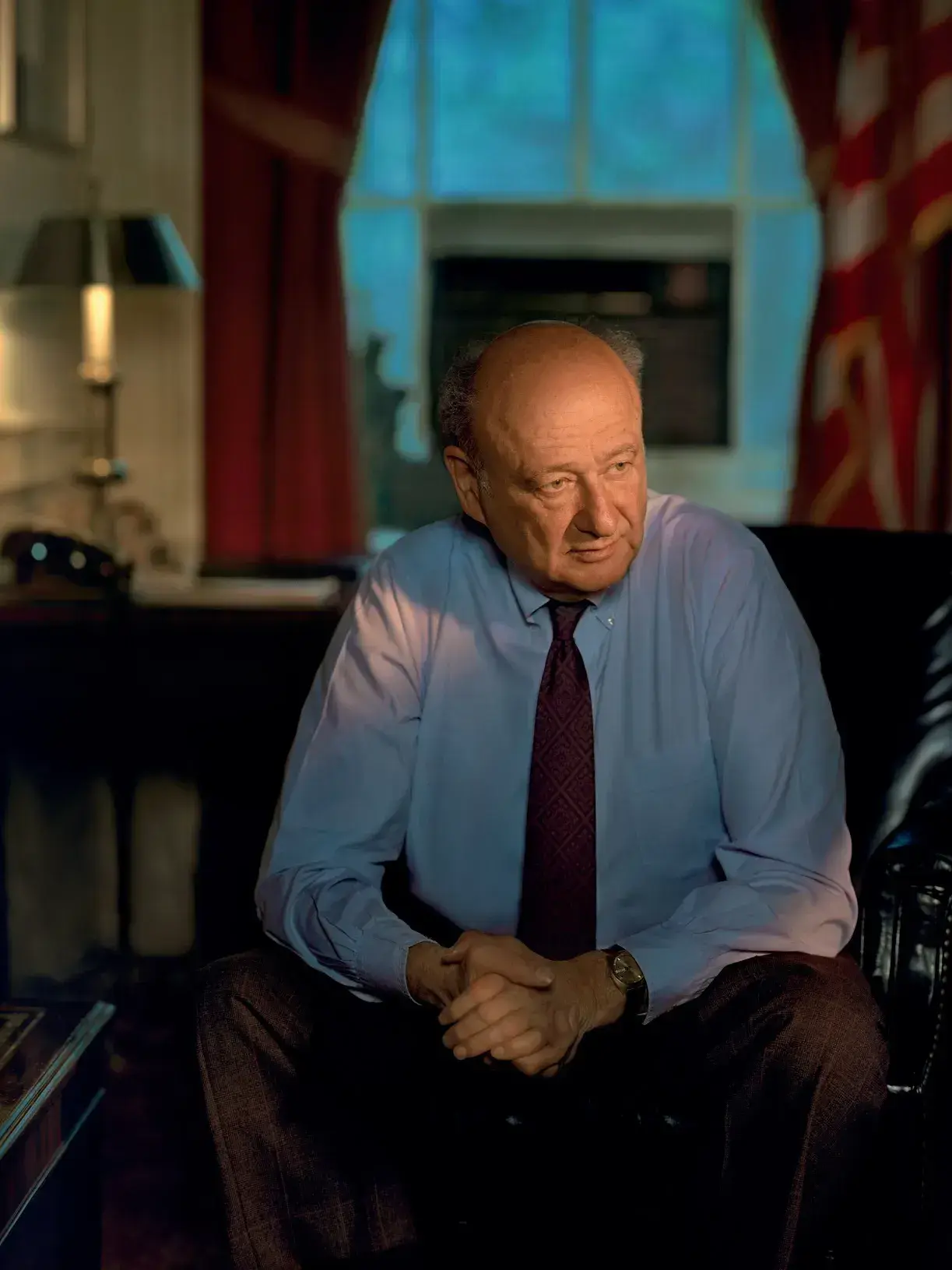
In this way, Heisler not only captured Ed Koch from a new, deeply human perspective, but also effectively opened a new chapter in the city’s visual history.

Zheludkov Andrii
CEO at Photo.Travel. In case of urgent questions or cooperation, please, drop me a line on andrzej@photo.travel. I speak English, Ukrainian, Russian.
Comments