Quick navigation
- Stories
- Events
-
Magazine
- History
- Person
- My experience
- Inspiration
- Controversies & Ethics
- Cultural perspectives
- Legal & Business
- Behind the scenes
-
Guide
- Travel Guide
- Questions & Answers
- Shop
- Forums
- Forums
-
Blogs
- All Blogs
- Create Blog
- Users
- Login


Table of content
1. Early Years: Searching for Identity2. The Americans: Breakthrough and Controversy
3. Robert Frank, Sarah Greenough, Ed Ruscha and Joel Meyerowitz on The Americans (Interview 2009)
4. Elson Lecture 2009: Robert Frank
5. A Shift to Cinema: Exploring New Forms
6. Later Work: Intimacy and Sincerity
7. This kind of photography is realism. But realism is not enough—there has to be vision, and the two together can make a good photograph
8. Don’t Blink
9. Robert Frank at Sotheby’s (download Sothebys’s catalogue of all Frank’s artworks)
- October 19, 2024 at 8:58 AM
-
22.5K
"The Americans": Breakthrough and Controversy
Robert Frank made a significant impact on documentary photography, bringing it into the modern era with a distinctive force. Rather than adhering to the detached formalism of photographers like Walker Evans or the poetic sensitivity of Henri Cartier-Bresson and André Kertész, he infused his work with a moody, cool intensity that created a recognizable signature style. Utilizing a 35mm Leica camera, Frank was capable of framing images with the precision of a tripod or capturing spontaneous, blurry moments akin to amateur snapshots. He was willing to use any method necessary to convey a vision that was both empathetic and confrontational, reflecting the complexity of his own character.
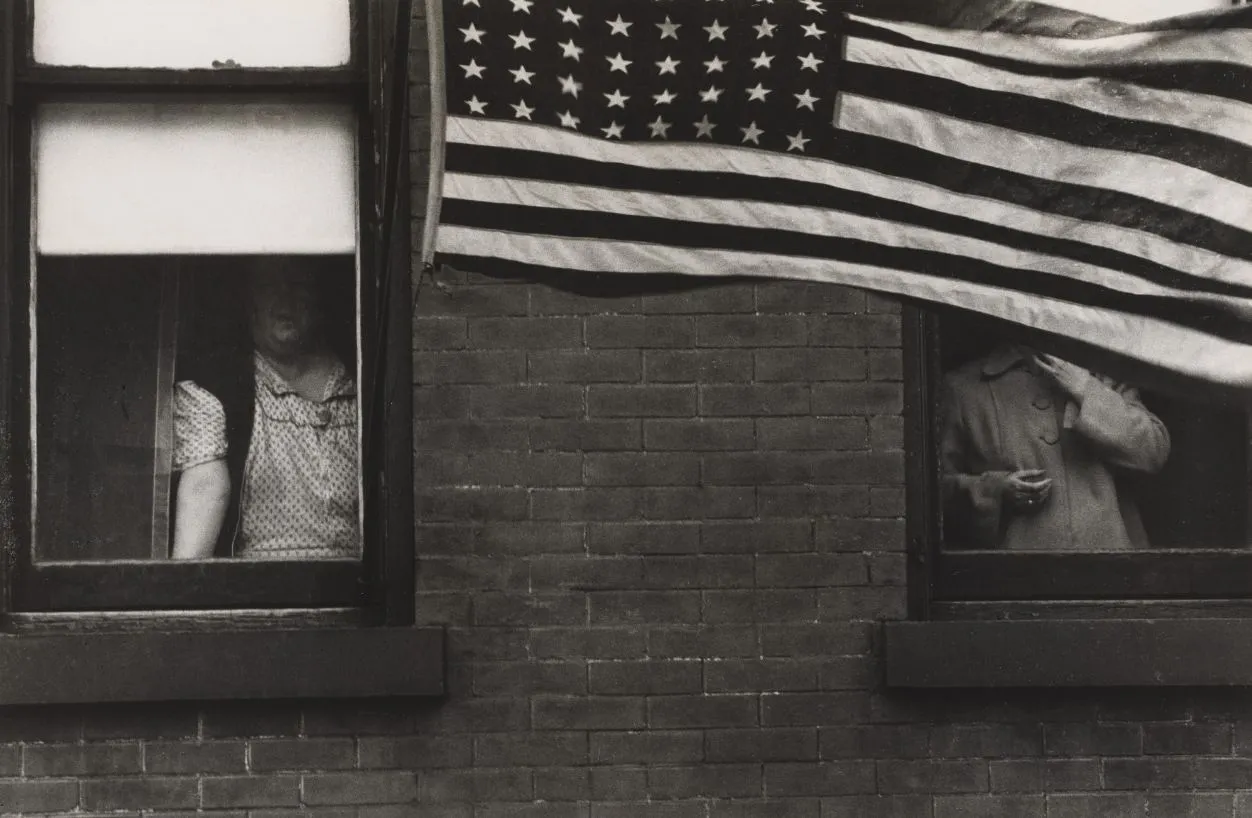
Two women standing at the window during a 1955 parade in New Jersey: the darkened face of one of them is barely revealed and the other is completely hidden by a huge US flag. If it is easy for us to recognize the poetry in the composition of this photo today, it is thanks to Frank's pioneering work. Such shots were highly unusual when his book "The Americans" came out at the end of the 1950s.
Prior to Frank’s influence, documentary photographers did not always seek objectivity; figures like Dorothea Lange and Russell Lee often had a political agenda in their work. However, during his road trips across the United States in 1955 and 1956 - supported by a Guggenheim fellowship - Frank wasn’t merely portraying his new country. Instead, he documented his personal reactions to it. This intimate and expressive approach to documentary photography marked a new direction in the art form.
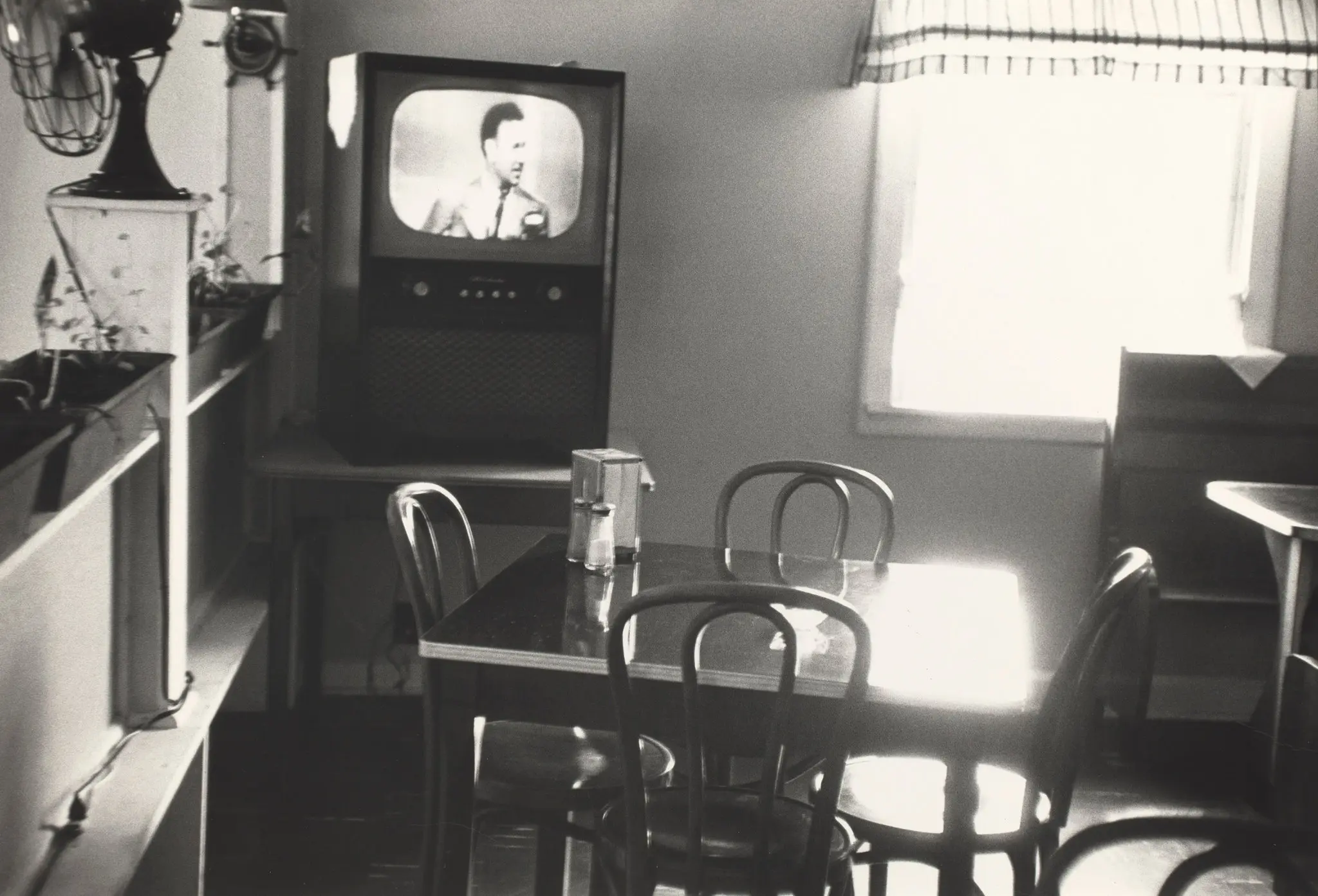
Another influential photographer in Frank's life was Walker Evans, renowned for his stark portrayal of the Great Depression in 1930s. He secured Frank's Guggenheim Fellowship, which allowed him to travel around the US in 1955. During these travels, he took nearly 30,000 photos; 83 of them landed in "The Americans." Shots such as this one show how Evans was also an artistic influence for Frank.
In 1959, his landmark book "The Americans" was published, fundamentally altering the perception of photography as an art form. This work, composed of 83 black-and-white photographs, presented the everyday lives of Americans from the perspective of an outsider. Frank employed his camera as a tool to reveal the social, racial, and cultural issues prevalent in society, drawing attention to topics that many preferred to ignore.
Frank once said about his work: “I wanted to create a document that was not just photography but a reflection of experience.” He sought to capture not only the visible aspects of life but also the feelings and emotions they evoked. In this book, he experimented with composition, enabling him to create unique and powerful images that challenged traditional notions of photography.
Initially, "The Americans" faced disapproval and criticism; many deemed it "anti-American" for its dark and pessimistic view of life in the country. However, this very contrast with conventional depictions of the "American Dream" is what made the book so significant. Frank challenged stereotypes, revealing a reality that many preferred to hide — social stratification, racism, poverty, and alienation.
His approach to street photography, where he utilized unprepared models, created a sense of spontaneity and authenticity. As Frank stated:
I worked with what I had and tried to see the beauty in everyday life
This book had a profound impact on the development of street photography and became foundational for many subsequent generations of photographers.
You can download "The Americans" in .pdf